
![[D2C HACK DAY Event Report] DINETTE × Fastnot Talk: “Influencers × Mastering Instagram”](https://cdn.sanity.io/images/cq2mc10e/production/8c2da42b7edac4b78d5f6fc765a9c33b17bca1fa-1024x476.webp)
On March 28, 2023, the online eventD2C HACK DAYwas held to great acclaim.
For those who were unable to attend the event or would like to review the content again, we have compiled this report.
In Session 3, which took place in the middle of the event, we held a session titled “Influencers × Instagram Mastery: New Customer Acquisition Strategies from Two Fast-Growing D2C Companies.”
Speaker Introduction

Mr. Takumi Narimatsu
Fast Knot Inc.
In 2018, I joined a major system vendor as a new graduate and worked in consulting, proposing system implementations and business process improvements. I later moved to a general consulting firm, where I supported clients in driving digital transformation (DX) in their supply chain operations. In December 2021, I joined Fastnot Inc. and transitioned into a marketing role. I am responsible for a wide range of marketing activities, including new product development, advertising operations, and offline product rollouts, primarily for the compression wear brand “BELMISE.”
Mr. Ryo Morinaga
DINETTE Inc.
Born in Fukuoka in 1996. While still a student, gained experience in contract production as a sole proprietor, then worked at a sales outsourcing company and an affiliate ASP before joining DINETTE in May 2021. Responsible for new customer acquisition for the cosmetics brand “PHOEBE BEAUTY UP.” Involved in a wide range of hands-on operations, including data analysis, CVR optimization, and negotiations with agencies.
Moderator: Akihiro Morimoto
wevnal Inc. / Executive Officer, CRO
Theme 1: Why Instagram, and why now?
wevnal, Akihiro Morimoto (hereafter, Morimoto):
The theme of today’s session is “How to Leverage Influencers × Instagram.”
Both brands are companies that make very effective use of Instagram, so I’m hoping we can have an in‑depth discussion.
To begin with, although this may be obvious to many of you, let me first share an overview of the main social media platforms.
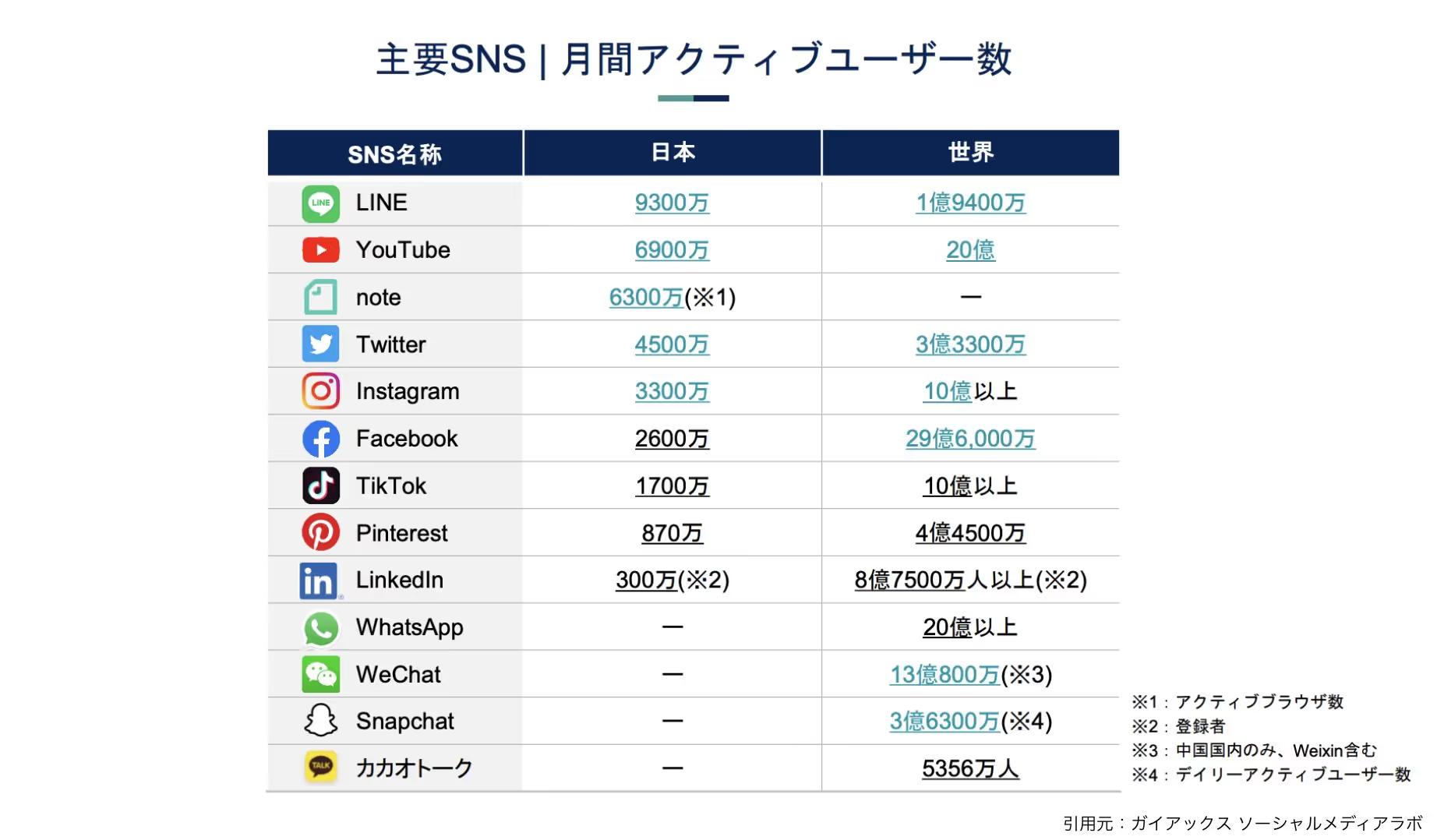
According to data from Gaiax, Twitter, Instagram, and Facebook have the highest number of monthly active users after LINE. Focusing on Instagram alone, it is used by an impressive 33 million people per month.
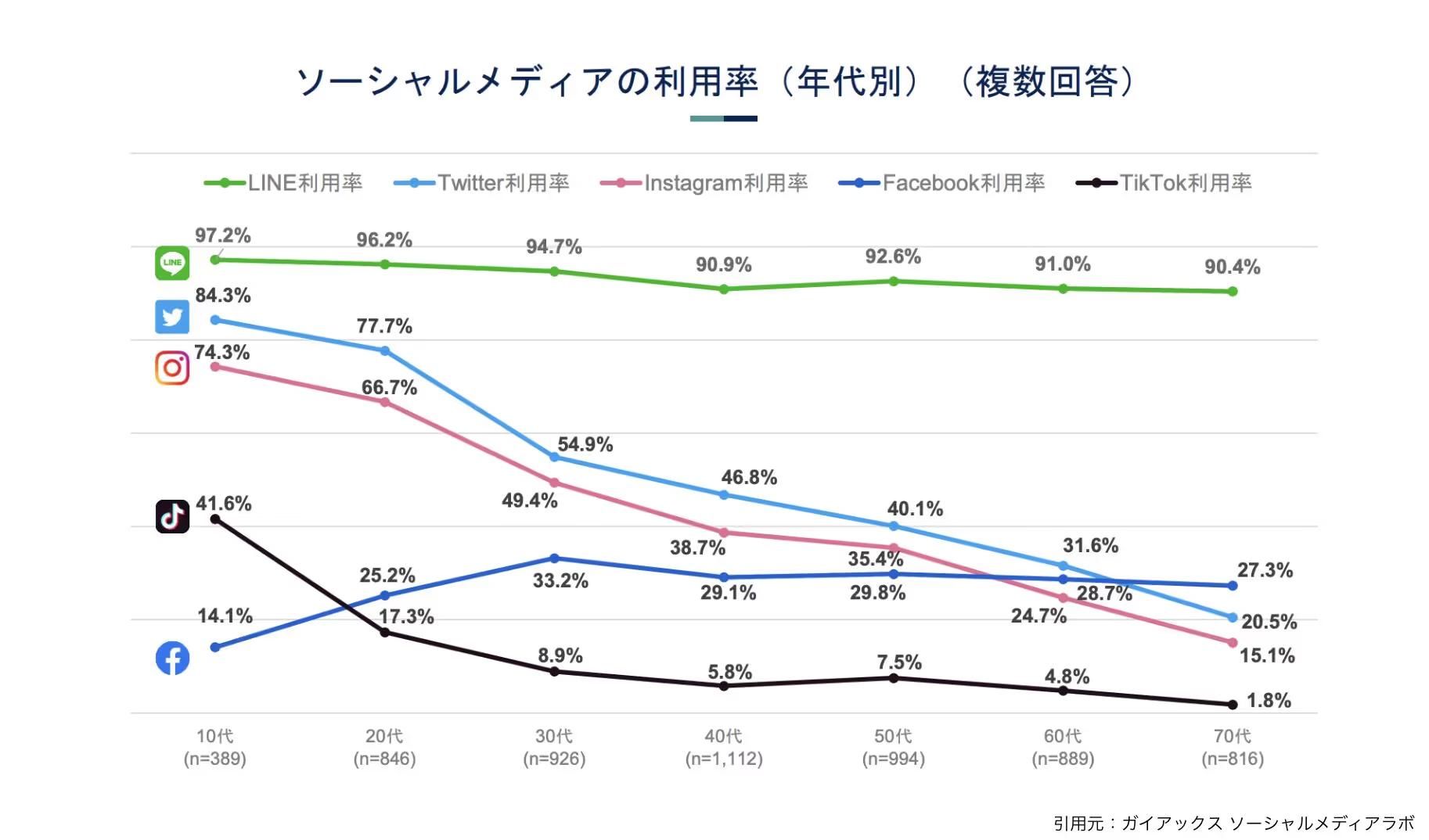
Next, regarding user age groups, LINE is used widely from people in their teens through their seventies, while Facebook skews older. However, Twitter and Instagram are used mainly by people in their teens to their thirties.
With this in mind, we will first ask Mr. Narimatsu from Fastnot why Instagram is attracting so much attention.
Fastnot, Mr. Takamitsu Narimatsu (hereafter, Mr. Narimatsu):
To answer briefly, it is because Instagram is a social network that strongly evokes aspiration.
Compared with Twitter or TikTok, Instagram more vividly reflects users’ lifestyles. For that reason, when people see posts from the accounts they follow on Instagram, it is easy for feelings of aspiration to arise, such as “I want to visit this shop” or “I want to copy this person’s fashion.” Therefore, by leveraging Instagram, I believe you can not only increase awareness, but also create strong authority—“because this person uses it, I want to try this product.”
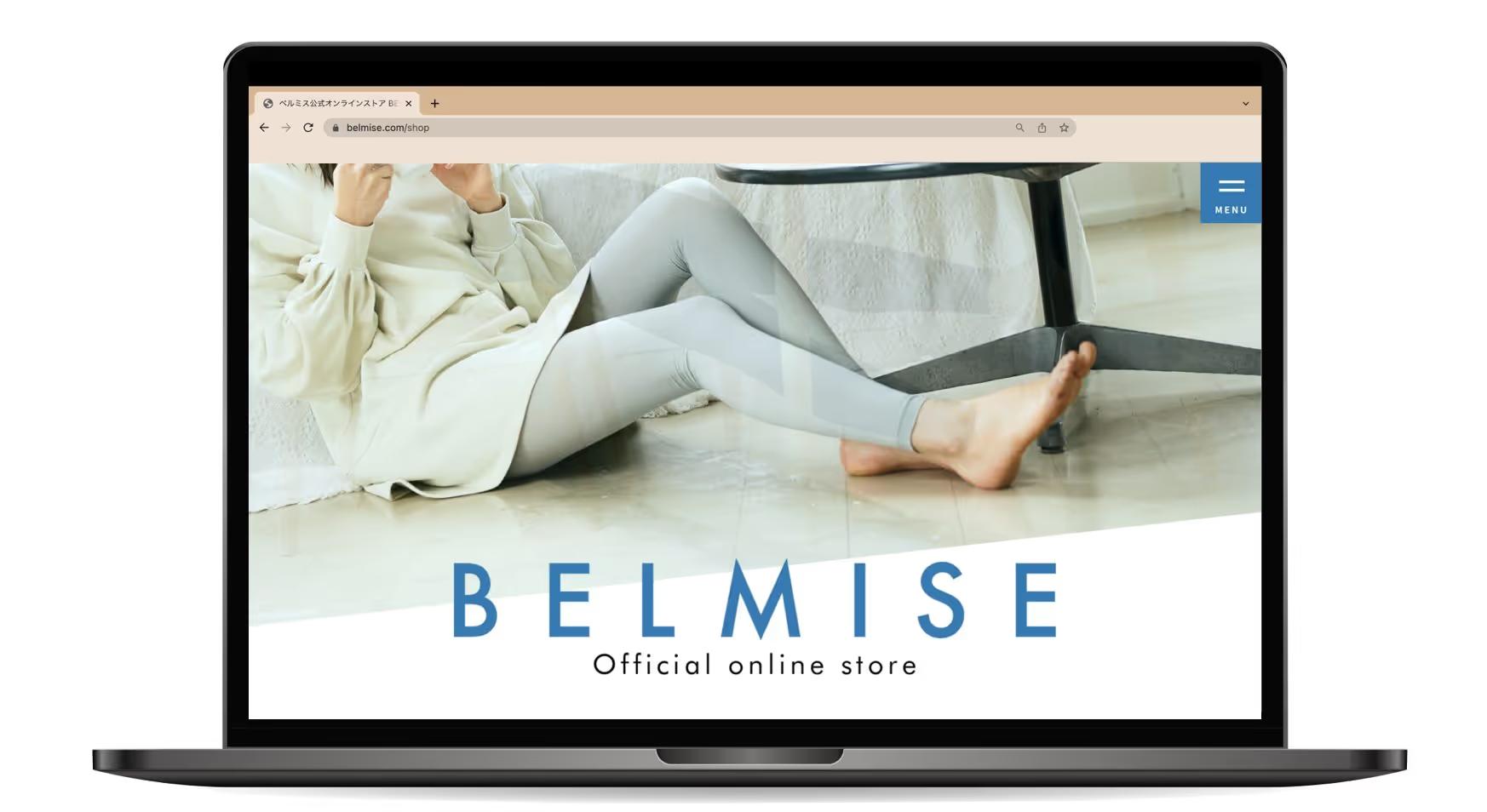
BELMISE official online store: https://belmise.com/shop
Morimoto:
I see. Ms. Morinaga from DINETTE, what are your thoughts on this point?
DINETTE Mr. Ryo Morinaga (hereafter, Mr. Morinaga):
That’s right. I believe Instagram currently fulfills four major roles.
The first is its role as a platform where one person can express themselves to many people.
The second is its role as a place where people spend time enjoying other people’s posts.
The third is its role as a tool that can be used to gather information about products and to make purchases.
And finally, it serves as a social network that includes one‑to‑one communication.
Whereas in the past even young people would say “Contact me on LINE,” recently we are seeing a shift toward “DM me on Insta,” for example. In other words, activities that used to take place across multiple apps on a smartphone are increasingly being completed entirely within Instagram.
I expect that, going forward, Instagram will account for an even larger share of the time users spend on their smartphones, which is why I believe it is something we should be focusing on now.
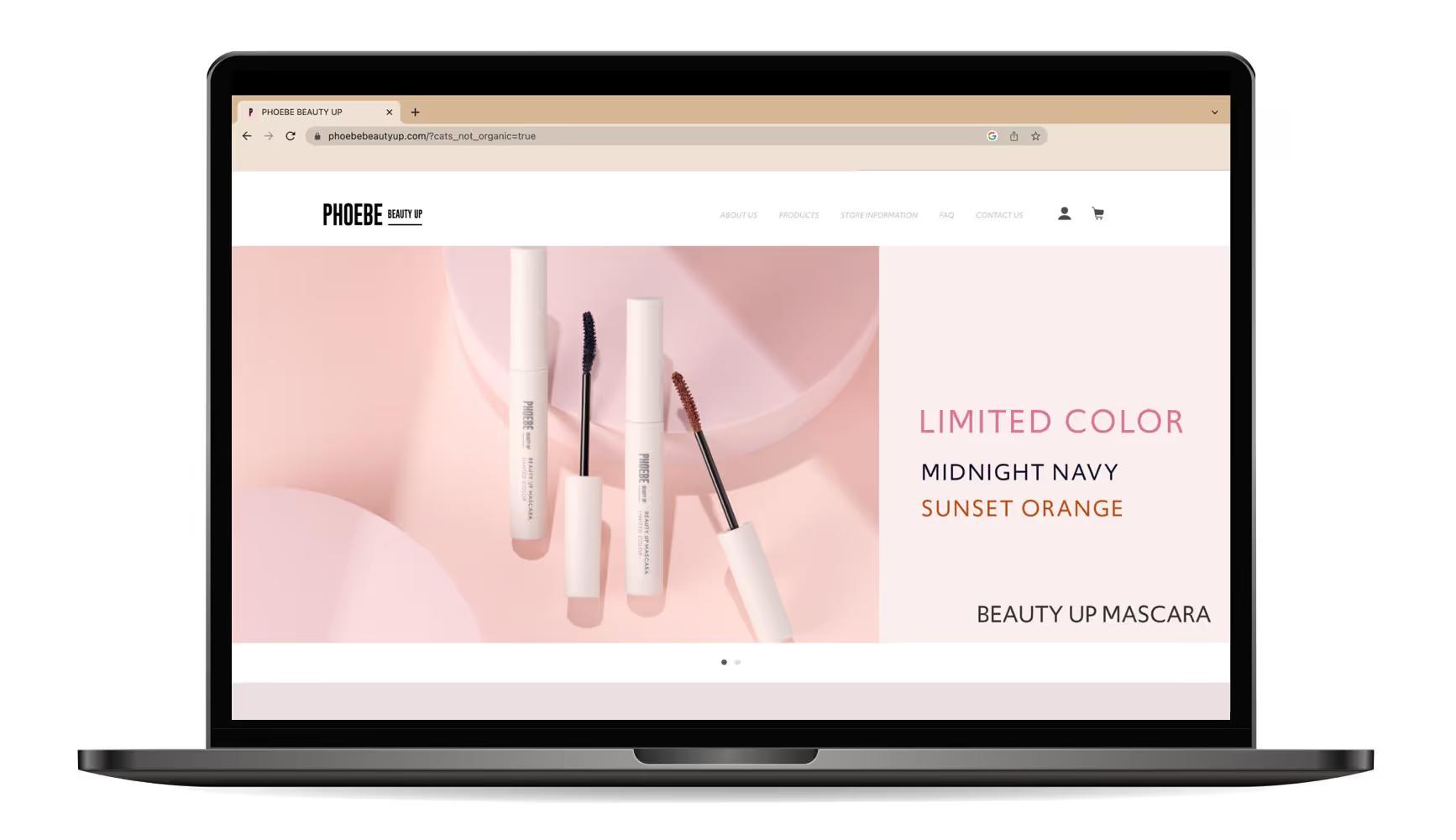
Official online store of PHOEBE BEAUTY UP: https://phoebebeautyup.com/
Official online store of PHOEBE BEAUTY UP:https://phoebebeautyup.com/
Morimoto:
I see. Thank you very much.
I’d like to ask both of you: had you already decided to focus on Instagram right from the very start of the business?
Mr. Morinaga:
Our representative, Ozaki,a beauty-focused media outlet,first launched it on Instagram, which was the initial trigger. Since then, Instagram has remained our main platform for initiatives.
Mr. Narimatsu:
We, too, focused on Instagram from the very beginning. However, we were also conducting PR on Twitter and TikTok, and as Instagram started to perform particularly well in terms of acquisition among those channels, we decided to concentrate our efforts there even more.
Theme 2: Influencer Marketing
Morimoto:
Next, I would like to talk about “how to approach influencers.” What should we do to get influencers interested and actually have them feature us?
I believe this is a topic that many readers of this article are curious about, and in any case, nothing can start unless influencers pick us up first. With that in mind, please share any concrete tips you may have.
Mr. Morinaga:
I believe it is important to think of the total volume of advertising slots that influencers can offer as a fixed quantityFirst of all, the number of PR posts that an influencer can make per account will not increase dramatically.
Structurally, influencers insert PR posts between their own regular content posts. As a general rule, consumers tend to dislike influencers who post too many PR pieces, and an excessive number of PR posts can lead to people unfollowing them, so going beyond a certain volume of PR posts is risky. For that reason, we do not expect the number of PR slots per account to increase beyond a certain level. In addition, it takes time to grow a new account with a large follower base, so it is hard to imagine the total volume of available advertising slots increasing rapidly.
In this situation, where the number of advertising slots is not increasing, more and more businesses want to use those slots, which has created a situation where companies from various industries are competing for the same limited inventory. If you only look at the PR activities of your direct competitors and simply mimic their moves, it will be difficult to get influencers to feature your brand.
To break through this, you need to research the businesses that are running PR with influencers, regardless of product category, and map out their activities. Based on that, it is advisable to determine when to approach a given influencer and to time your negotiations appropriately. If you are merely asking, “Please do PR for us,” you may not see any results.
Viewed this way, Fastnot, who is here with us today, actually ends up being our competitor, doesn’t it?
Morimoto:
It’s true, the user attributes are quite similar.
Morinaga:
Yes, that’s right.
We try to avoid it as much as possible, but to be honest, when our campaign schedule overlaps with that of a well-known company, the response rate tends to be poor.
Morimoto:
How about Fast Knot?
Mr. Narimatsu:
To make influencer initiatives using social media successful, I believe the key is “how much we can make influencers genuinely want to post about our products.”
Recently, influencers tend to place greater importance on their own branding. As a result, even when they receive requests from companies, there are many cases where they will not do PR unless it is a product they can personally stand behind.
Also, as Mr. Morinaga mentioned earlier, there is a limit to the number of products an influencer can promote. If someone you follow is constantly posting PR content, you start to wonder, “Are they really only introducing products they think are good?” and your trust declines, which can damage the influencer’s own brand image. That is precisely why, within the limited number of PR posts they can make, it is crucial to ensure they genuinely want to feature our products.
With that in mind, I see two key points for getting influencers to choose our products. The first is that the product itself should have features that will look good in posts. For example, something with strong visual appeal, like a facial cleanser that lathers up into a rich foam, or something with an easy-to-understand effect, like a drink that makes you want to go to the bathroom 30 minutes after consuming it.
The second point is to continuously create topics that are easy to post about. If you keep posting about the same product in the same way, your followers will eventually get bored, leading to a decline in impressions. As a result, if the company side cannot provide fresh material, the influencer’s posts may be replaced with PR for other products. For example, it may be effective to share information with influencers such as the launch of a TV commercial or an announcement that sales have surpassed XX hundred thousand units.
It is essential to always plan initiatives and communicate from the perspective of “How can we make it easier for influencers to promote our products?”
Morimoto:
I see, that aspect is very interesting.
Mr. Morinaga, do you keep these points in mind when you communicate with influencers?
Mr. Morinaga:
Yes, that’s right.
In our communications with the PR agency, we’ve been conveying similar points to what Mr. Narimatsu mentioned, so as Mr. Morimoto says, I believe this is extremely important.
Morimoto:
By the way, when you actually carry out influencer marketing, what kind of KPIs (Key Performance Indicators) do you set internally? For example, is it things like share rate or number of likes?
Mr. Narimatsu:
Within the scope of what I manage, it would be the number of posts. I check how many posts were generated by the campaign we ran, and how that compares with past campaigns. By asking influencers what they felt worked well and what did not, we also use those insights to inform future initiatives.
Mr. Morinaga:
For internal evaluation of our initiatives, we look at attribution to see the extent to which posts are affecting branded searches and organic traffic.
Morimoto:
I see.
Some readers may still find influencer marketing a bit hard to grasp.
Both of you on stage are, I believe, very familiar with influencer marketing, but if you were to start from scratch, I would like to hear about any tried-and-true initiatives or recommended approaches you would suggest.
Mr. Morinaga:
Rather than approaching influencers directly, we make our requests through agencies. When selecting an agency to partner with, I believe it is important to find a representative who can provide explanations that are logically convincing. It is essential to discuss questions and initiatives together and to move forward in a way that keeps the bottlenecks clearly in focus.
Morimoto:
Mr. Narimatsu, what are your thoughts?
Mr. Narimatsu:
Whether influencer marketing succeeds or not is already determined from the product development stage. Naturally, you need to analyze market needs and competitors for product development, but it is also important to understand the influencer market.
For that reason, I believe it is best to analyze social media posts and gather influencers’ opinions from the product development stage, and use those insights to shape the product design.
Theme 3: Key Points for an Instagram Landing Page
Morimoto:
Thank you very much. Our final topic is “Key Points for Instagram Landing Pages (LPs).” In general, the path from a post to a purchase typically follows the flow of “the user visits a landing page (LP) and then makes a purchase.”
However, LPs also need to maintain a consistent brand identity, and if that consistency is lacking, it can create a sense of distrust. With that in mind, could you talk about how to use LPs effectively, the key points to consider, and how to build a cohesive brand world through them?
Mr. Narimatsu:
Yes. When we create landing pages, we make a point of designing them so that customers who view the LP can picture what they will be like after purchasing the product. As I mentioned at the beginning, on Instagram many people become interested in products because they aspire to be like someone they see there or to experience a similar lifestyle. That is why, in addition to functional value, we also emphasize emotional value, and in collaboration with the design company we create LPs that let people imagine themselves after the purchase and feel excited about it.
Morimoto:
Belmise’s landing page made it easy to picture the product and left a strong impression with a design that would make many women want to try buying it.
Mr. Narimatsu:
Thank you very much. Our intention is not only to spark interest in our products, but also to help improve people’s daily lives by enabling them to solve their problems through using them.
Mr. Morinaga:
What we want to communicate as our brand message is “BE ME.” This comes from our intention to encourage people not to become someone else, but to become the version of themselves they want to be. For that reason, we avoid creating landing pages that impose fixed ideas, and we pay close attention even to subtle expressions. I believe that small, steady efforts are essential to preserving and protecting our worldview so that it is not compromised.
Morimoto:
If there is a particular reason you came to think that way, I would very much like to hear it.
Mr. Morinaga:
It made us start thinking about “what is it that we actually want to communicate?”
In performance advertising, negative expressions or wording that excessively plays on people’s insecurities are often said to be effective. However, that can sometimes diverge from the brand’s core message.
Of course, such appeals can be necessary for acquiring new customers, but if the content we put out as a brand is inconsistent, it may create a sense of discomfort at some point and lead customers to drop off. That is something we try to be very careful about.
Through our regular A/B testing, we realized the importance of small, incremental improvements, and that prompted us to look at our advertising as a whole and ask whether any sense of inconsistency is building up.
In our day‑to‑day work, we pay close attention to these points.
Morimoto:
Thank you very much.
We have a question: “I imagine that influencers sometimes receive product-related inquiries directly. How do you handle those?” Could you tell us how you manage that aspect of control?
Mr. Narimatsu:
It is true that we receive a certain number of questions and inquiries directed to influencers, and it is difficult to control all of them. For example, we often get questions about how to use the product or how to choose the right size, but since we provide the product when we request PR, we ask influencers to reply within the scope of what they can answer. If they still do not know, or if there is an irregular or unusual inquiry, the question is sent to our company through the agency.
Morimoto:
Thank you very much.
I have one more question. We received the question: “At around what level of follower count, UGC volume, etc., did you start to see a sales impact from Instagram?” What are your thoughts on this?
Mr. Morinaga:
To be frank, I don’t think followers or UGC directly equal sales. If you start with a solid strategy and make effective use of Instagram ads and influencer PR, the number of followers on the brand account is not all that important.
Mr. Narimatsu:
I’m on the same page as Mr. Morinaga. I do think that looking into UGC and other posts submitted by general customers to learn about a product leads to greater trust in the brand and product, and to a stronger desire to “try it.” However, in the end this is only one of the factors in a customer’s purchase decision, so it is difficult to set a clear metric such as “sales will increase because we have a certain number of UGC posts.”
Morimoto:
So, in other words, it’s important to get started first without locking in specific figures or timelines, correct?
I’ve realized there was a lot I didn’t know, and this has been very informative. Thank you very much.
To close, I’d appreciate it if each of you could share a brief comment.
Mr. Narimatsu:
Yes.
At present, as the range of product sizes and colors has expanded, the number of SKUs has increased, which in turn has led to more choices at the time of purchase and become a factor in users dropping off from the LP. In this respect, BOTCHAN has become an indispensable tool for reducing user stress by optimizing the input form. Going forward, by introducing new payment methods and strengthening external integrations, we would like to work together to design scenarios that enable customers to purchase products even more smoothly.
Mr. Morinaga:
That’s right. Since this is a talk session hosted by BOTCHAN, I’m a bit unsure whether I should say this publicly, but to be frank, I feel that the functional differences between companies’ chat-based tools are steadily shrinking. Given that, I think the key criterion for choosing a tool will be each company’s ability to respond and support.
In that respect, BOTCHAN’s CS representatives have extremely high literacy, and they work closely with the in-house engineers, so our requests move forward smoothly, which we greatly appreciate.
Morimoto:
Thank you very much. We do not intend for “BOTCHAN” to remain just a tool; we want to continue committing to improving our customers’ sales and LTV going forward. To both of your companies, we would be delighted to continue working together in the future as well. That concludes Session 3. Thank you all very much.
Mr. Narimatsu / Mr. Morinaga:
Thank you very much.
If you would like to confirm whether BOTCHAN can be implemented in your company, or if you would like advice tailored to your situation, please feel free to contact us with your questions or inquiries. A specialist consultant will respond to you.