

After working in sales and as a sales manager at B2B companies, he moved on to become a marketer at Enshu Railway Co., Ltd., which operates B2C businesses.
Although Masayoshi Ishibashi had made a spectacular career change, what awaited him there was his company’s real estate website, whose conversion rate was struggling at the time.
When he had just joined the company and it was difficult to secure a large budget, what caught Ishibashi’s attention for improving the CVR of the company website wasthe chatbot service “BOTCHAN”.
What made BOTCHAN so compelling, how did the numbers change after its implementation, and what new insights were gained through using BOTCHAN?
Takayanagi from the Customer Success team at wevnal Inc., the provider of BOTCHAN, conducted the interview.
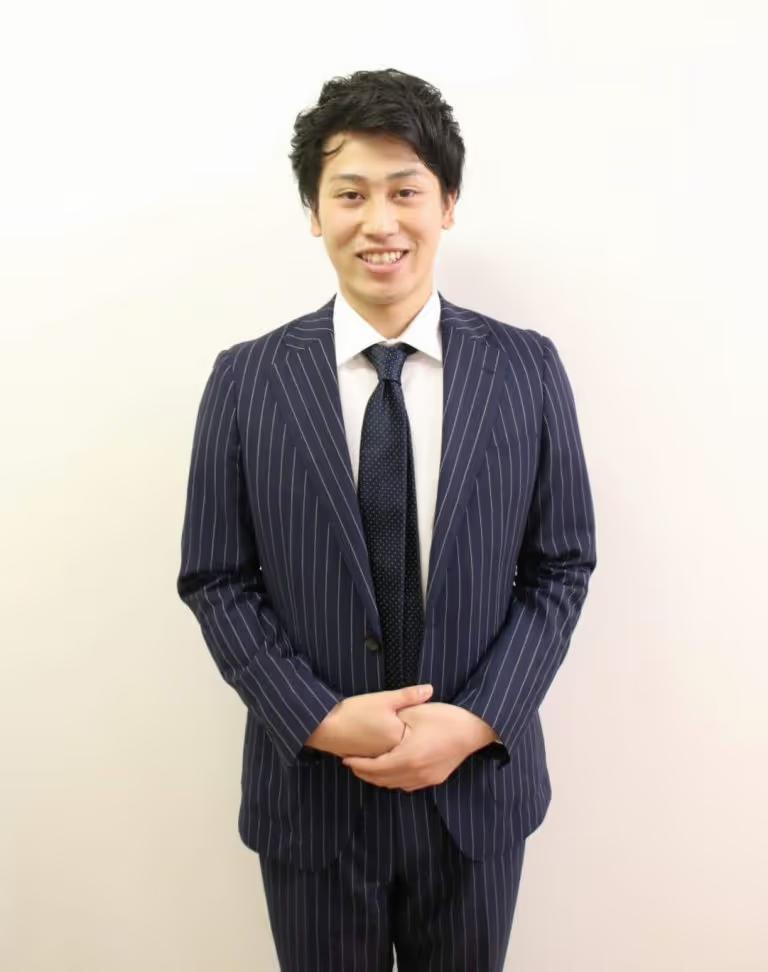
(Takayanagi, Customer Success Representative at wevanl Inc.)
"Oh, I never thought of it that way!" — a shocking encounter with BOTCHAN
Takayanagi (hereafter, ━━): What first led you to learn about BOTCHAN?
Ishibashi (hereafter, “Ishibashi”): It all started with a trade show. About a month after I joined Enshu Railway, I visited a certain exhibition, and wevnal had a booth there.
When you first explained BOTCHAN to me, I was really shocked.
━━ Thank you very much. More specifically, what aspects did you find so striking?
Ishibashi: “The key point is ‘replacing input forms with chat.’ I remember thinking, ‘Oh, I hadn’t thought of that approach!’ Of course, I already knew about chatbots as a tool and had used them in my previous job as well.”
However, up to that point my understanding of chatbots was more along the lines of FAQ-style tools, and not something that would increase the number of conversions simply by being implemented, like BOTCHAN.
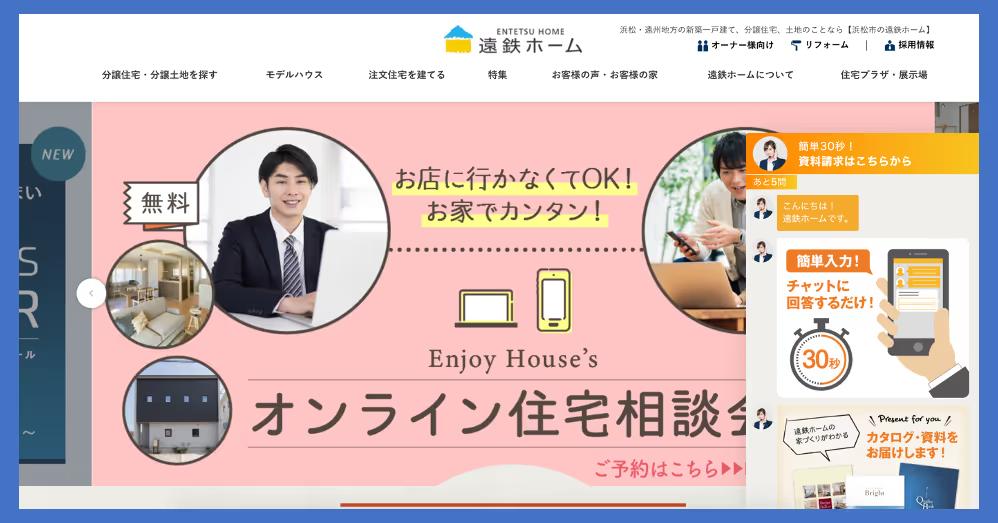
(BOTCHAN installed at the bottom right of the site *PC view)
━━ It’s true that, in the market, there are many so‑called “FAQ-type” chatbots that mainly respond to customer questions, isn’t that right?
Ishibashi: At the time, there really weren’t many acquisition-focused chatbots like BOTCHAN, even when we looked at other companies’ solutions. When we were considering implementation, there actually weren’t that many vendors to compare, so we made the decision relatively smoothly. That said, it’s not as if we had no concerns at all about whether it would actually deliver results.
However, at the time our own website’s CVR was in a critical state, so there was a strong mindset of “let’s first try what we can do right now.”
We didn’t really see any results immediately after implementation…
━━ As you were considering various initiatives to improve your own website, you decided to implement BOTCHAN.
Ishibashi: But at first, it really didn’t produce much effect, did it… (laughs)
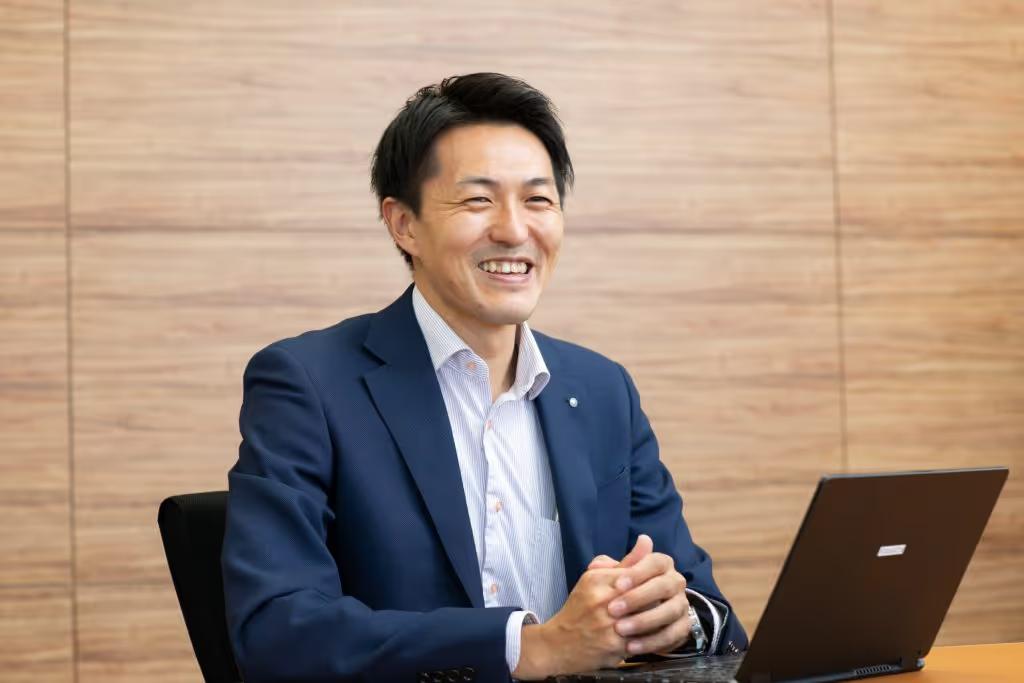
Ishibashi: But the fact that we didn’t see results immediately after implementation was not a problem at all. From the beginning, I never expected that simply installing it on the site would instantly improve the numbers—there’s no such easy win.
What mattered was what came next: we worked with Mr. Takayanagi to establish a cycle of analyzing and validating the current data, then implementing improvements.
━━ Things have finally calmed down a bit now, but during the improvement phase until we started seeing concrete results, we were having meetings with you very frequently, weren’t we?
Ishibashi: Right. As we discussed various points, one specific issue that emerged was that many users were dropping off at the first question. We tried a number of different measures in response, but the first thing we did was narrow the conversion action down solely to “Request materials.”
At first, in addition to “Request materials,” we had prepared various other types of conversion actions, such as “Book a visit” and “Request land information.”
In the first question, we had customers select the type of conversion they wanted, and then branched the scenario based on that, but we felt that this made the user flow overly complicated.
━━ Among those three options, we also took into account that “Request materials” has the lowest psychological barrier for customers, and on that basis I proposed that we first narrow our focus to “Request materials” only.
Ishibashi: We also started using images in the chatbot scenarios. This is to make it easier for customers to visually understand what specific information they can obtain from the images.
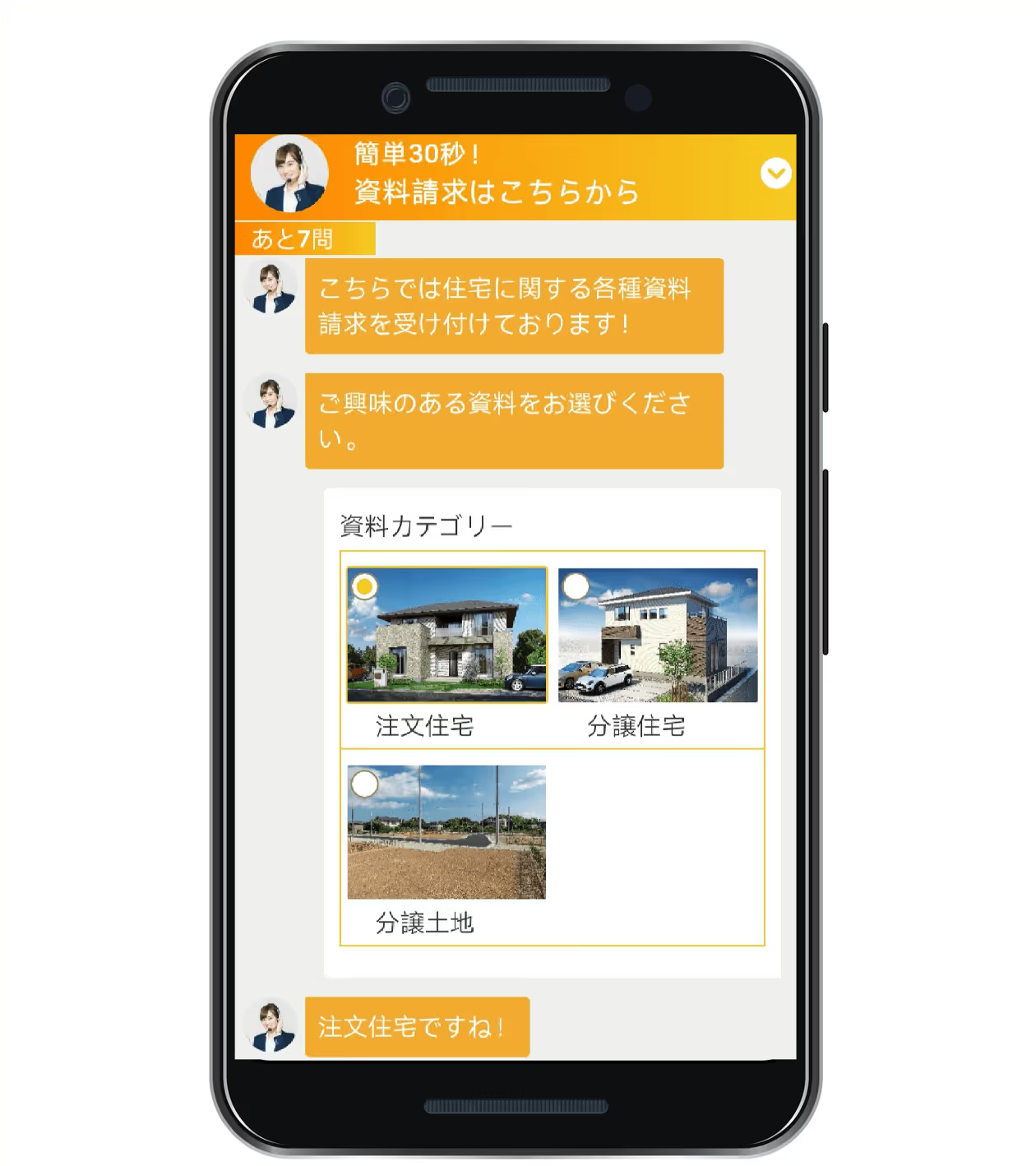
(Scenario in BOTCHAN *smartphone display*)
━━ In addition, within the scenario we also made a point of clearly indicating approximate times, such as “Done in 30 seconds!”, so that customers who launch the chatbot feel it is easy and convenient to use.
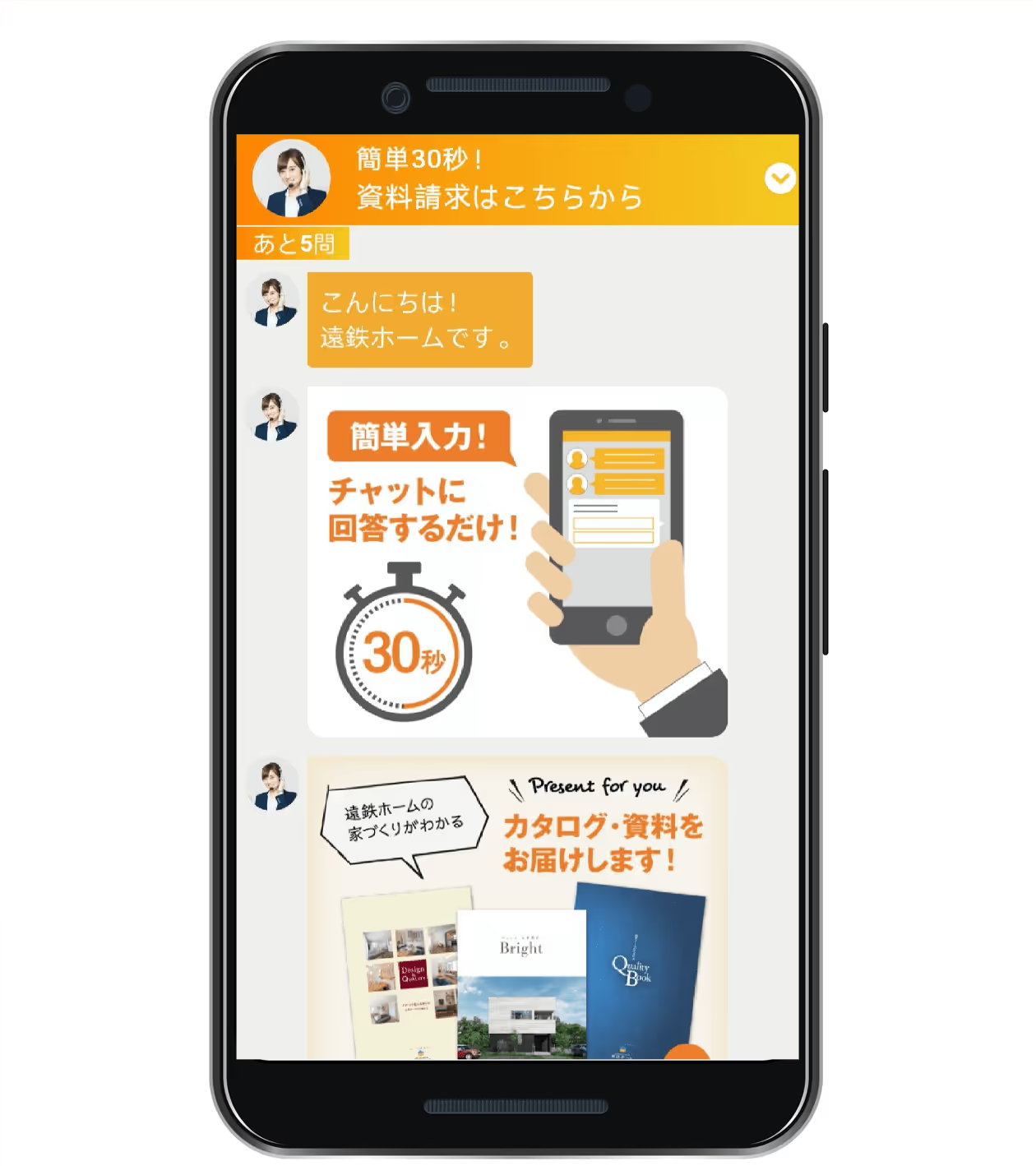
(Scenario in BOTCHAN *smartphone display*)
Ishibashi: That’s right. As we worked together on those improvements, the number of monthly information requests ended up doubling compared with when we first introduced the system. Internally speaking, when I first joined the company after changing jobs, there was very little budget for digital marketing, and almost all of the advertising budget was being spent on offline initiatives such as print and outdoor signage.
However, due in part to the impact of COVID-19, the multi-tens-of-millions annual budget we had been spending on print has suddenly been shifted to the web. From here, we would like to strengthen our digital marketing efforts across the entire company.
Using BOTCHAN has made me think more carefully about our customers’ feelings.
━━ Finally, do you have any requests regarding functions or support you would like BOTCHAN to provide, or things you would like to do with it going forward?
Ishibashi: That’s right. At this point, BOTCHAN is fulfilling the original objectives we had for its implementation. Also, even when we were not seeing much in the way of results at the beginning, Mr. Takayanagi and everyone at wevnal provided us with very dedicated support.
Rather than talking about wanting more features or support, the biggest realization I’ve had from using BOTCHAN is that I’ve started to think much more about how our customers feel.
I believe that actions such as wondering why customers dropped off at this question, or thinking about how we can make it easier for them to enter information, are extremely important, yet all too easy to overlook.
━━ Indeed, if we are not constantly mindful that this is a service for our customers, we can easily end up prioritizing the provider’s convenience instead.
Ishibashi: It was very good that I was able to further refine that perspective through discussions with Mr. Takayanagi. That said, to have this kind of discussion in the first place, you need the underlying data as a foundation, don’t you?
With BOTCHAN, we were able to capture data such as “at which question users dropped off” and “what percentage of customers reached the conversion,” which was also very valuable for us.
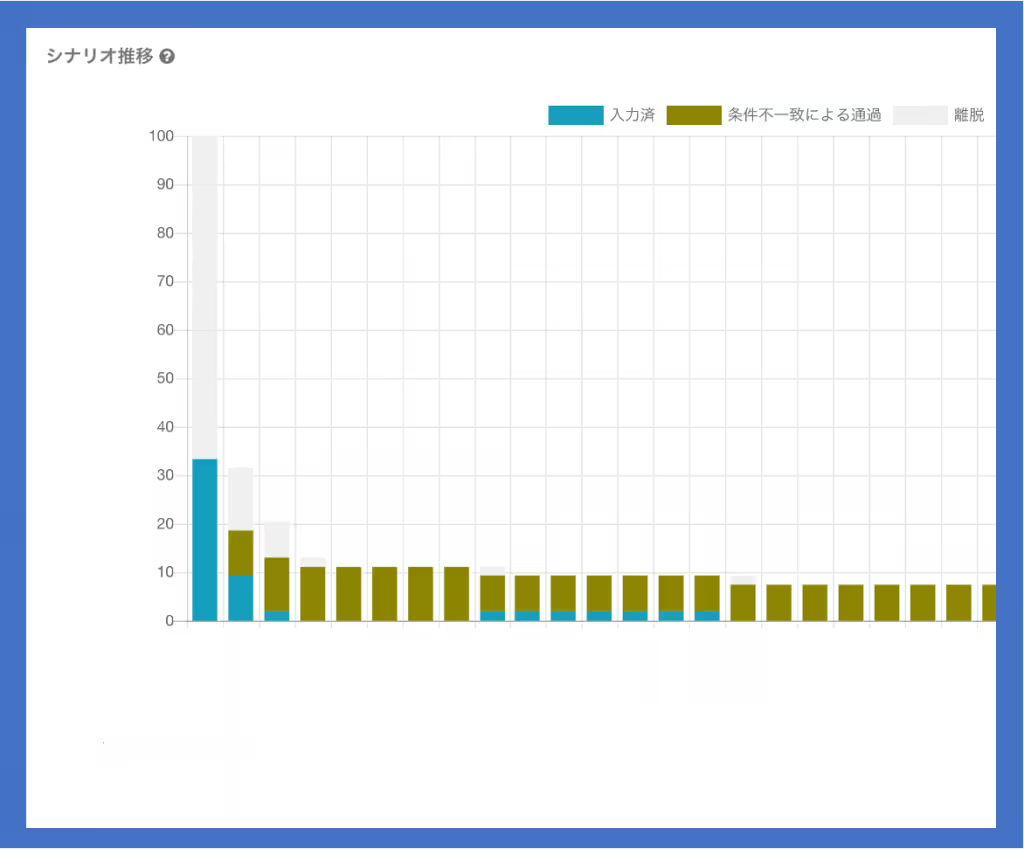
(Example of an administration screen *This is not actual data from Enshu Railway Co.)
━━ The ease of viewing the management dashboard and conducting analysis is one of BOTCHAN’s strengths, so I’m also pleased to hear you say that.
Ishibashi: First of all, we now have one successful case, so I’m hoping we can use this as a foundation and roll it out horizontally across the group going forward.
In addition to our real estate business, our company is involved in various other fields such as nursing care, automobiles, and tourism, so it would be ideal if we could also leverage this in those other departments.
━━ Absolutely. I will continue to support you going forward.
...
If you are considering implementing BOTCHAN and would like concrete advice tailored to your company’s potential use cases and current situation, please feel free to contact us.
One of our consultants will assist you.