
As the setting in which consumers make purchasing decisions shifts from offline to online, many businesses are likely struggling with how to get customers to choose their products. Some of you may also be facing obstacles to reaching annual sales of 1 billion yen.
We conducted an in-depth interview with Ms. Rina Matsuura of Hagukumi Plus Co., Ltd., whose presentation was extremely well received at a recent webinar.
In this article, we will thoroughly dissect how to build the optimal brand experience and marketing strategy to break through the 1-billion-yen barrier.
The interviewer is Akihiro Morimoto, Executive Officer and CRO at wevnal Inc.
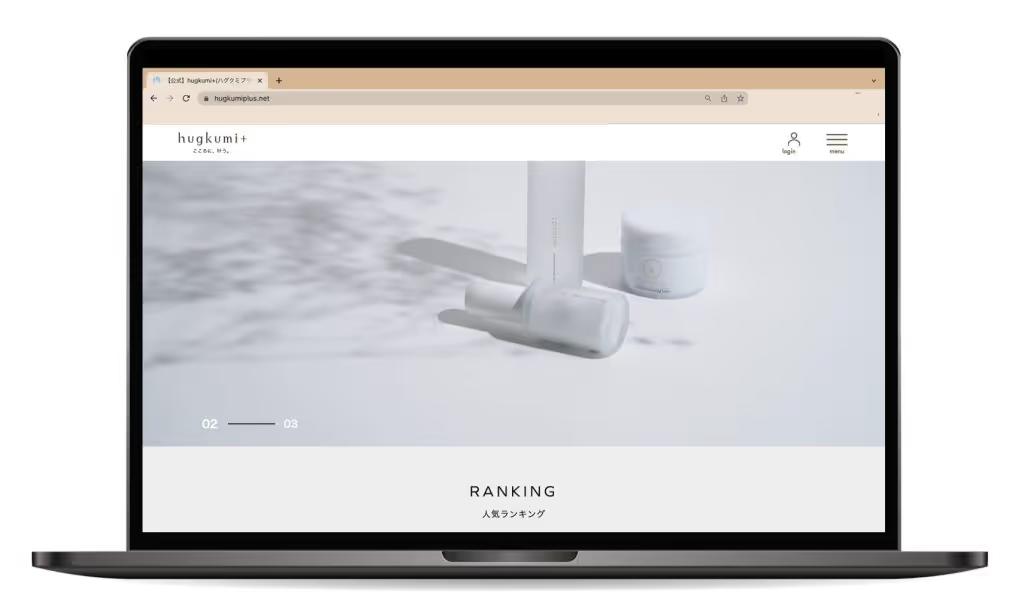
Hagukumi Plus Official Website https://www.hugkumiplus.net/

Ms. Rina Matsuura
Executive Officer, Hugkumi Plus Co., Ltd.
After graduating from university, she joined Recruit Lifestyle Co., Ltd. (now Recruit Co., Ltd.), where she worked in planning and sales. After leaving the company, she spent a period working in a non-settled style, including as a guesthouse staff member and in agriculture, before joining hugkumi+ Co., Ltd. in 2018. She was appointed Executive Officer in 2020. Since joining, she has been primarily responsible for product development and marketing, including the “cocone Clay Cream Shampoo.”
Table of Contents
- ◼️Points to be mindful of from product development through to sales launch
- ◼️Points I pay attention to immediately after sales begin
- ◼️Key priorities for operating our D2C brand going forward
◼️Points we pay attention to from product development through to sales launch
━━ To begin, may I ask about the phases from the product development stage through to the start of sales?
Yes, our product development process is fairly standard and not particularly original, but since we are a small company, we have very few staff involved in product development. In some cases, one person is almost entirely responsible for a single brand, so our way of working may be quite unique.
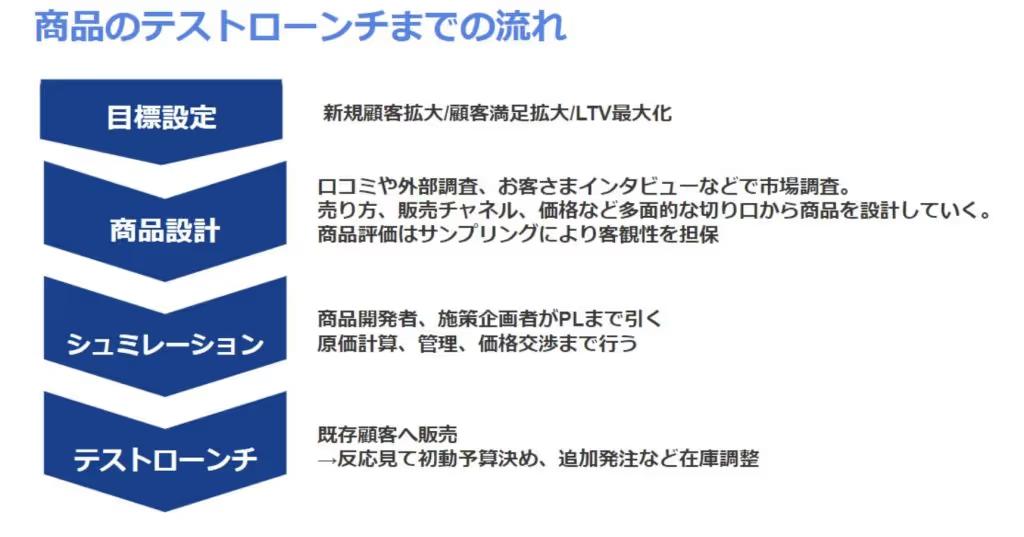
Normally, front-end products are led by the marketing team. They use methods such as market research, word-of-mouth, external studies, and customer interviews to define product elements with a high likelihood of success from multiple perspectives—such as sales approach, channels, pricing, and personas—and then incorporate the highest-priority elements into the product. The product design itself is handled by the product developer, but to keep product evaluation as objective as possible, we repeatedly align and refine the concept by incorporating feedback from the persona and other sources.

Another distinctive point is that the simulations are carried out directly by the product developers themselves. A single person conducts all cost‑management simulations, including cost of goods, promotional expenses, monthly profitability and payback forecasts, and the product developer is also responsible for price negotiations. By concentrating this scope of responsibility, we believe it is possible to cut costs and move forward efficiently.
For the test launch, we first conduct an advance release to existing customers and, after observing sales performance, we carry out a survey of purchasers. Based on the sales results and feedback from the survey, we determine the initial test budget and then consider product improvements and business development.
Regarding the background to the development of the Clay Cream Shampoo, the cocone series originally launched skincare products, which created a strong desire to enter the haircare category as well. In addition, due to stricter advertising regulations and rules governing health foods and skincare, we paid very close attention to how the product was presented in advertising. We also focused on the then‑growing trend of video advertising and aimed to develop a product that would have strong impact in video formats. Furthermore, recognizing the significant influence of influencers, we placed importance on designing the product in a way that would be well received by them.
What left a particularly strong impression on me during our customer interviews was a mother with children who said, “The bathroom is a battlefield.” She told us that when she bathes with her children, she has no time to wash herself, and even washing her hair is a real struggle. From that, we came up with the idea of creating a product that would both support mothers and help them stay beautiful.
With this background, we set out to develop all‑in‑one hair care that would make bath time easier. At first, the general image of rinse‑in shampoos was that they leave hair dry and rough. However, we believed that if we could overturn that perception, it would lead to a hit product. From a pricing perspective as well, high‑priced items around 1,500 yen each for shampoo and treatment were performing well, so we felt that even if we set the price at around 3,000 yen, the added value would be sufficient. We were conscious of that aspect from the very beginning of product development.
━━ I see. More specifically, how do you come up with ideas?
That is a difficult question. I think it depends on the theme of what you are trying to achieve with product development, but we try to take an approach where we focus on the problem we want to solve and then gather information.
I am not sure if this fully answers your question, but I believe that having a clear purpose is essential in any context. In product development, it is crucial to thoroughly explore both the purpose and the customer’s needs. It is also important not to settle on just one solution, but to collect and evaluate a range of ideas.
━━ Thank you very much. I got a very strong sense that Hagukumi Plus truly puts customers first.
When developing products, how often do you conduct user interviews, and what aspects do you pay particular attention to?
I believe the key point is what you want to gain through the interviews.
For example, in the case of product development, we ask about the products customers are currently using and what they think about them. For customer interviews conducted for new initiatives, we segment existing customers and adjust the interview content according to their level of engagement. We prepare the content in considerable detail in advance.
━━ May I ask specifically what quantity you usually start with for the first lot of new product testing?
In the case of a test launch starting with existing customers, it depends on the size of those customers. We prepare a sales forecast and determine the appropriate quantity accordingly.
◼️Points to watch immediately after sales launch
━━ Now, for the next topic, could you tell us what you pay attention to in the period from launch through the start of sales?
Yes. At our company, we carefully select a limited number of partners and run tests with a small budget. As mentioned earlier, we determine the budget based on the response to pre-order sales. We keep the number of partners limited and, while monitoring metrics such as LP performance, we make improvements and, in collaboration with wevnal, receive proposals for chat scenarios to maximize the numbers. If the CVR and initial acquisition volume exceed our internal threshold, we consider allocating a larger budget for subsequent phases.
We believe it is too late to assess an appropriate CPO only after F2 or LTV figures are available, so to prevent overspending on advertising, we have established leading indicators.
For example, as a leading indicator for F2, we use the upsell rate as a metric and measure it on the assumption that there is an actual correlation. If the upsell rate is poor, we investigate the cause and, when necessary, adjust CPO targets in detail by layer, such as by agency or media.
We also make active use of surveys and reviews to check whether our products have become self-satisfying and to identify potential areas for improvement. Because these can provide valuable hints, we have built mechanisms that allow us to capture this information on a daily basis.
━━ Thank you very much.
I imagine it can be quite challenging to gather information every day. What kind of system or process do you use to manage this?
At our company, we have implemented mechanisms that allow each department to review information on a daily basis, such as developing systems that regularly send information to internal communication tools and feeding customer feedback gathered by the call center into our internal chat tools.
━━ I see, thank you very much.
A moment ago, the topic of optimizing CPO and LTV came up. I’m interested in how you handle aspects such as offer design and the frequency of testing. Could you tell me more about that?
Yes. At our company, we have established several leading indicators and built a system to check them on a daily basis. If we detect signs of a slowdown, we take preemptive action. We have not set any specific interval such as every few months or once a month for these checks.
━━ So you see this purely as a method for changing offers in response to shifts in thresholds or specific indicators, correct?
Earlier, you also mentioned your relationships with partners. I’m interested in how much you disclose about CPU and LTV adjustments to the partners your company works with—such as agencies, advertising agencies, and SPs.
We do not disclose specific internal figures, but we do share relative evaluations against internal averages and target numbers. As for coordination with partners, we proceed in consultation with our agencies.
━━ Thank you very much.
Apart from web advertising, I believe that one of the first things we can do is to collect word-of-mouth feedback and obtain comments from third parties. Could you tell me how we can make effective use of that information?
Collecting customer feedback is indeed important. Sampling from non-users is a commonly used approach, but lately I feel that reviews from long-term users generate a better response. Effective ways to leverage these reviews include featuring long-term users’ comments on the landing page, using them on upsell pages, and incorporating them into email newsletters.
◼️Key priorities for operating D2C brands going forward
━━ Well then, let’s move on to the next topic.
I’d like to ask you about what you consider important in order to continue as a long‑lasting brand in the future.
There are various challenges such as legal regulations, advertising costs, and rising prices, and you also need to think about how to strengthen your brand power, don’t you?
One of the key points we focus on is the “value we provide.” It is important not only to offer the product itself, but also to deliver added value to customers and thereby improve customer satisfaction. Now that it has become easier to gather customer feedback through word of mouth and other channels, there is no reason not to make use of it. Customer feedback is a source of ideas and should be reviewed by every department. In addition, the speed with which we incorporate that feedback is also critical.

Next is the concept of being customer-driven. Even in departments that do not deal directly with customers, I believe everyone should understand customer feedback and use it to improve their performance. I also feel that both the speed of capturing the customer’s voice and the speed of acting on it are crucial.
Lastly, there is the point that “people naturally gather around those who genuinely enjoy the outcomes.” I believe it is important not only for customers, but also for the members executing the work themselves to enjoy it. It is precisely because there are team members who take pleasure in the results that we can build external connections and create fans.
━━ Thank you very much.
You place importance on added value and feel it is essential to focus on developing people and providing ongoing follow-up. There may be aspects that feel like headwinds, but this has reaffirmed for me that, in order to build a long-lasting brand, it is indispensable both to find ways to deliver high added value and to cultivate outstanding talent.
By the way, let me ask you something a bit tangential. I had heard in advance that Hagukumi Plus places a strong emphasis on recruiting talent, so I would very much like to hear what kind of people you would like to work with going forward.
Yes, that’s right. As this is an industry with a great deal of change, we believe it is preferable to have people who can enjoy that change and take initiative. Adaptability and proactiveness are not qualities that can be easily acquired, but we would like to actively hire individuals who possess these capabilities.
━━ So, what exactly are the essential elements that lead to a hit?
I believe it comes down to minimizing failures as much as possible.
While it is quite difficult to ensure the reproducibility of hits, failures tend to be highly reproducible. By analyzing the causes of failures and accumulating related know-how, and then steadily reducing those failures, I focus on increasing the probability of achieving a hit.
━━ Finally, please tell us what makes “BOTCHAN” so good and why you continue to use it!
The main reason is the quality of their customer success.
wevnal’s CS team has a high level of literacy and responds very quickly, which has been extremely helpful for us. Our company is strengthening EFO and running countless tests, and they have handled everything without omissions, committing sincerely and making a major contribution to improving our metrics so far.
We look forward to continuing to work with them as an indispensable partner for our company.
━━ Thank you very much. Thank you for sharing such valuable insights.
I look forward to your continued support.
Hagukumi Plus Official Websitehttps://www.hugkumiplus.net/
If you would like to confirm whether you can implement the BX platform “BOTCHAN” in your own company, or if you would like advice tailored to your situation, please feel free to contact us with your questions or inquiries. A specialist consultant will respond to you.