The evolution and challenges of a long‑established reuse brand
"First, try it. Then look at the numbers and improve."
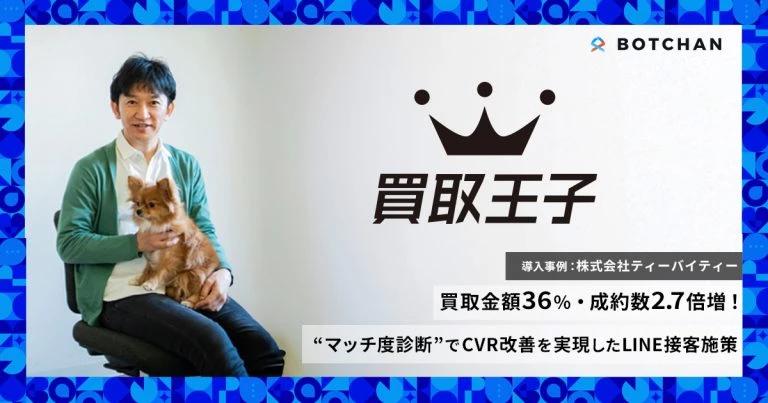
So says Takuya Katagiri, CEO of HOLIS Inc.
“Purchase Prince” is a reuse brand that Katagiri has been involved with since its launch, supporting its growth from an on-the-ground perspective, and is now operated through T-By-T Inc.
Having built a loyal following with the convenience of being able to “sell almost anything in your home all at once,” Purchase Prince has now adopted a new customer engagement initiative using LINE: “BOTCHAN Engagement.”
Rising advertising costs, stagnating CVR, and the challenge of building effective strategies for repeat customers—faced with multiple issues, how did collaboration with a partner who co-designed and refined their LINE initiatives become the breakthrough?
This article focuses on Katagiri’s “on-the-ground approach” and “data-driven commitment to improvement,” exploring the background leading up to the introduction of BOTCHAN Engagement, the actual initiatives and results, and future expansion plans.
Company Overview: The HOLIS Group, Achieving Growth Through Diversified Businesses, and “Kaitori-Ouji”
The HOLIS Group is a corporate group that operates approximately 36 businesses across multiple domains, including e-commerce, reuse, and fitness, with retail as its core. Its total sales scale reaches roughly 8 billion yen, and the group as a whole is driving a diversified business model.
Among these, the reuse business operated by T-By-T Corporation is branded as “Kaitori-Ouji” (Purchase Prince). It began around 2009 with the purchase and sale of DVDs, and as online sales channels such as Amazon Marketplace expanded, it significantly broadened the range of products it handles. Today, it is widely used by many customers as a home-delivery purchase service for “items at home you want to sell in bulk,” covering everything from books, CDs, and game software to home appliances and daily necessities.
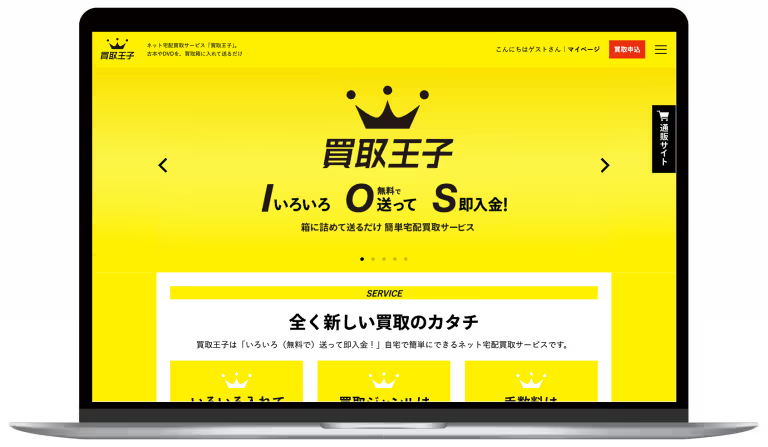
Kaitori Ouji Service Site: https://www.kaitoriouji.jp/
Team Member Introduction: Group Representative Takuya Katagiri, Who Lives by the Motto “Just Try It First”
Mr. Katagiri is consistently involved in everything from on-site workflows for home-delivery purchasing to advertising initiatives, working to drive improvements through data utilization and actively introduce new marketing approaches. Leveraging his extensive experience and agility, he plays a leading role in embedding a “let’s try it first” mindset throughout the organization.
Mr. Katagiri:
“If something interests you, the first step is to try it. If it doesn’t fit, you can just stop. That kind of culture has really taken root in our company.”
Challenges and background before implementation: soaring advertising costs and the need to prevent missed opportunities
Within the HOLIS Group, we have been proactively expanding advertising-driven traffic in the e-commerce and reuse domains. However, in recent years, as competition has intensified, advertising unit costs have risen, and a major challenge has been how to avoid losing users who visit our own site and successfully lead them to conversion (purchase assessment applications).
Mr. Katagiri:
“With advertising costs remaining high, it was essential to minimize cases where customers who visited our site dropped off partway through. We therefore focused on implementing LINE initiatives that could lower the barrier to use and allow us to control the churn rate.”
However, building LINE initiatives from scratch in-house would have required significant man-hours, and we were uncertain about the necessary expertise. Just at that time, a representative from a trusted agency introduced us to ‘BOTCHAN Engagement,’ which prompted us to begin considering its implementation.
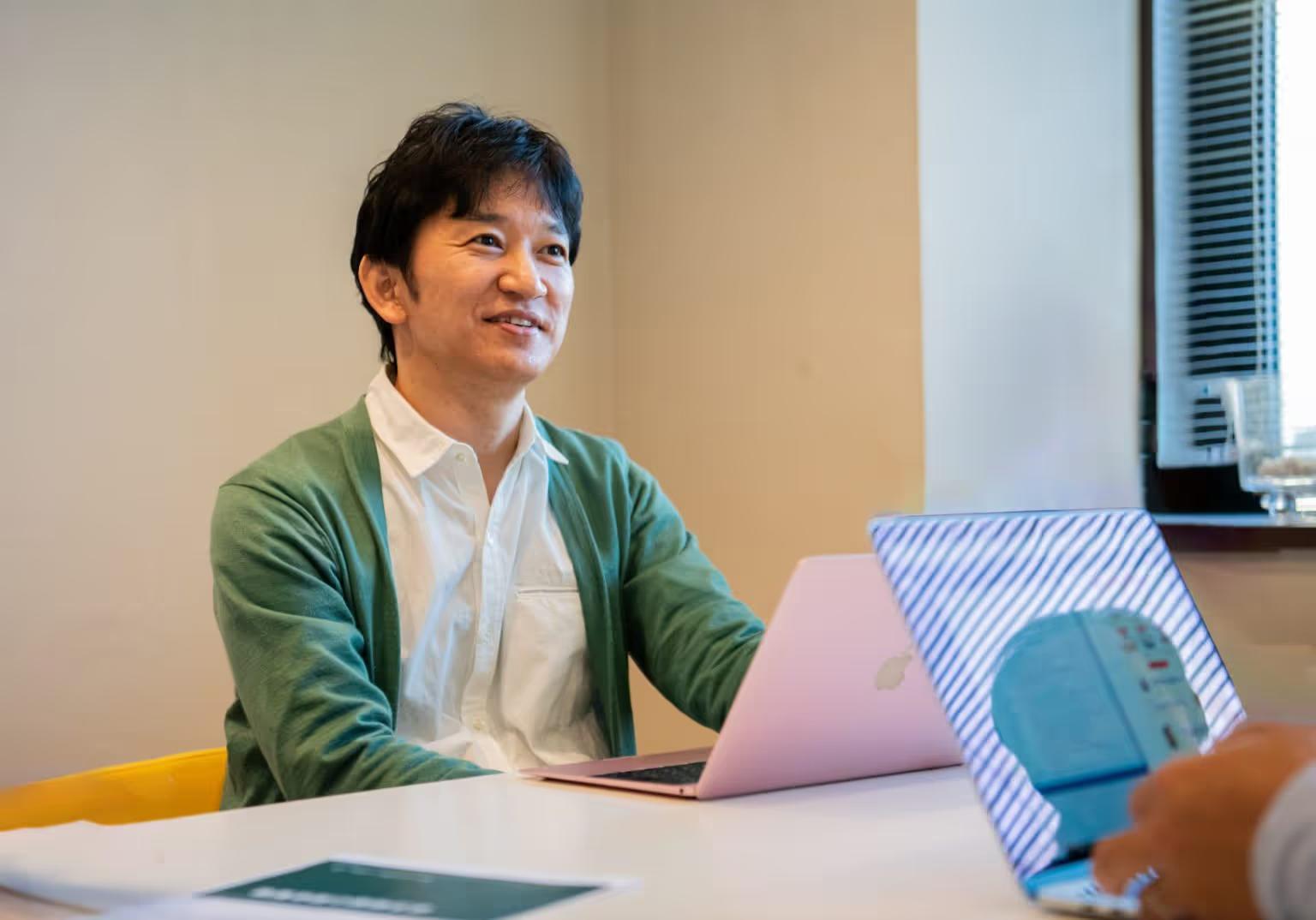
Mr. Takuya Katagiri, Representative of HOLIS Inc.
Encountering BOTCHAN and the deciding factors for its adoption: the reassurance of a referral and speed
According to Mr. Katagiri, within the HOLIS Group there is a deeply rooted culture of “first try any new advertising or initiative,” and they were proactively considering the introduction of “BOTCHAN Engagement” from an early stage.
・Ease of contracting, with the option to start on a six‑month basis
・Convenience of being able to run effectiveness tests while keeping initial costs low
・Support structure that provides end‑to‑end assistance, from implementing LINE initiatives through to ongoing operations
In particular, the points mentioned above provided strong support and led to a smooth internal consensus.
Mr. Katagiri:
"In general, when we first come into contact with a new company’s services, it often takes considerable time to consider implementation due to uncertainties around the support structure and day-to-day operations. This time, however, we had the benefit of an introduction from a trusted agency, so we had no particular concerns about implementation, and internal consensus was reached smoothly. In addition, we saw significant potential in initiatives that leverage LINE, so under the policy of ‘let’s try it first,’ we decided to move forward with the implementation."
Decision Criteria for Implementation and Execution: Pursuing Optimization Through a Flexible PDCA Cycle
From high-amount likelihood assessment to match-rate assessment
At the time of introduction, based on a proposal from the CS representative, we centered our approach on content called the “High-Value Potential Diagnosis,” which provided a mechanism that made it easy for users to picture the estimated appraisal value if they sold items from their homes.
However, when we analyzed the actual figures, we found that although the number of inquiries had increased, the results in terms of purchase amount and conversion rate did not meet our expectations.
In our regular meetings, we therefore held repeated discussions with CS based on the data and decided to switch to a new piece of content, the “Kaitori-Ouji Match Diagnosis,” which leverages the unique strengths of “Kaitori-Ouji.”
Four months after implementation, the CVR improved steadily, with the purchase amount increasing by up to approximately 36% and the number of successful transactions rising to about 2.7 times the previous level, resulting in a significant improvement in both volume and quality.
Mr. Katagiri:
“With initiatives that put high appraisals front and center, we began to see more cases where customers would instead send in bundles of low-priced items, which ultimately made it difficult to maximize profitability. At the same time, we reaffirmed that our true strength at KAITORI OUJI lies in the ability to handle a wide range of product categories in a single shipment. We therefore shifted our strategy to diagnostic-style content that leverages this characteristic and aligns with user needs. As a result, we have seen steady improvements in key metrics such as purchase amount and conversion rate.”
Meticulous data analysis and attentive, detailed support
The “BOTCHAN Engagement” CS team conducts detailed KPI analyses and regularly reports on areas for improvement in the diagnostic content and points where users drop off. In regular meetings, they consistently review creatives and messaging, and their close communication and rapid adjustments are helping to drive better results.
Mr. Katagiri:
“In operating these initiatives, they carefully break down each numerical result, identify causes, and build hypotheses, while running the PDCA cycle at a very high speed. As I am handling multiple tasks in parallel, I tend to postpone certain items, but they send reminders at the right timing, which is extremely helpful from a progress management standpoint as well. As a partner, I feel they provide a very reliable support structure.”

Results and value after implementation: expanding potential through improved CVR and effective use of repeat customers
Visible increase in conversions
Since introducing BOTCHAN Engagement, Mr. Katagiri feels confident that “the clear improvement in our numbers has made it easier to decide to increase our advertising budget going forward.”
In fact, there is a steady upward trend in both the number of purchases and the total purchase amount, and he notes that, from a profitability standpoint as well, the situation is such that a sufficient return on investment can be expected.
New prospects for driving repeat business through effective use of LINE friends
"Kaitori Oji" has been supported as a service with a high repeat rate, backed by demand for selling items in bulk, but until now our ongoing outreach to existing users has been limited.
We are currently exploring the possibility of using LINE to send reminders at appropriate times to users who have added us as a friend, encouraging them to send in items they no longer need.
By leveraging the functions of "BOTCHAN Engagement," we can design these kinds of initiatives to increase repeat usage more effectively, so we are moving forward with discussions between both companies while exchanging ideas.
Future outlook and key initiatives: further strengthening of measures and expansion to other businesses
Based on the results achieved with “Kaitori Oji,” we are currently preparing to implement “BOTCHAN EFO,” aiming for even more effective initiatives through integration with “BOTCHAN Engagement.”
By combining the two products, we can take a more multifaceted and continuous approach, such as sending reminder messages and conducting surveys tailored to user behavior.
In addition, within other businesses in the HOLIS Group, we are exploring the potential of initiatives that leverage LINE, and, drawing on the insights gained from “Kaitori Oji,” we are considering how we can contribute to improving marketing efficiency horizontally across the group.
Advice for people facing the same challenge: “Start by trying it, then improve as you review the data.”
Finally, we received a message from Mr. Katagiri for companies that are looking to reduce the exit rate on their own websites or are interested in making use of LINE.
Mr. Katagiri:
“As advertising costs continue to rise, I believe many companies share the challenge of how to convert site visitors without losing them along the way. BOTCHAN Engagement repeatedly implements rapid improvements based on data, which lowers the barrier to introduction and makes it easy to see results. I recommend starting small, and once you get a tangible sense that CVR is improving, you can then scale up your initiatives. I also see a major advantage in being able to run the PDCA cycle together with an external team that is highly experienced in LINE initiatives.”

...
If you would like to confirm whether BOTCHAN can be implemented in your own company, or if you would like advice tailored to your situation, please feel free to contact us with your questions or inquiries.
A specialist consultant will respond.