
Company Introduction: A functional food brand specializing in e-commerce, dedicated to addressing men’s health issues
Locabo Works Inc. is an e-commerce company that plans and sells health foods and supplements. Its main product is a functional food for men with labeled health claims, “Uric Acid and Fat Double Buster.” With its unique design that addresses both uric acid level management and the reduction of visceral and subcutaneous fat, the product has gained strong support among health-conscious men.
Our business model is a subscription-based e-commerce operation that uses web advertising as its primary customer acquisition channel, and is run end-to-end by a small team, from new customer acquisition and CRM (Customer Relationship Management) through to fulfillment. By combining optimization of advertising investment with maximization of LTV (Customer Lifetime Value), we drive the business forward in a data-driven manner.
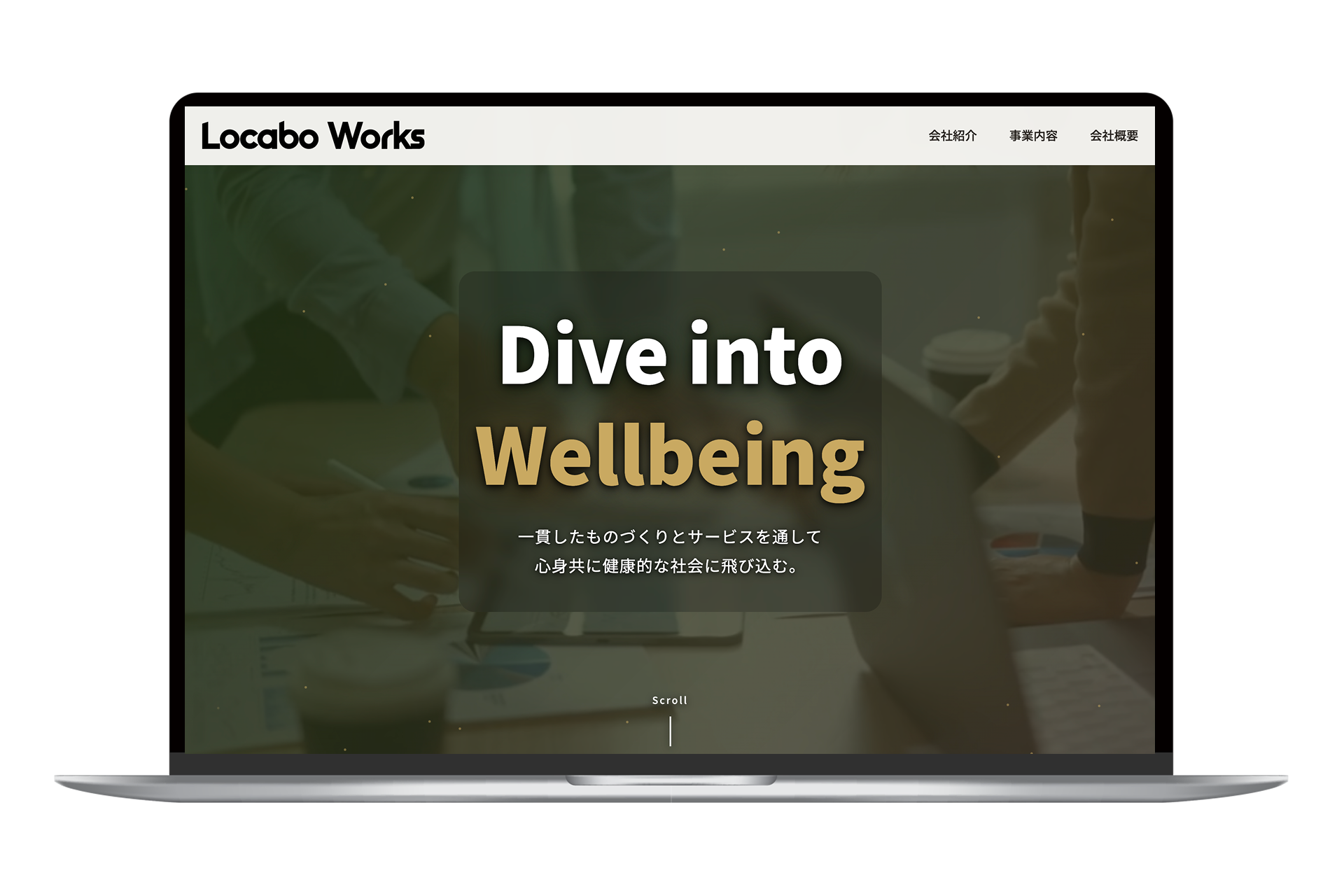
Corporate website: https://locaboworks.com/
Staff Introduction: A practitioner who works across all areas of the mail-order business, from CRM to product development
Mr. Tomohito Ide, General Manager, E-commerce Business Division, Locabo Works Co., Ltd.
My career in the mail-order business began when I joined Zeroplus Inc. in 2021, where I was responsible for CRM, customer support, and fulfillment for a men’s shampoo brand and a women’s beauty supplement brand. After transferring to Locabo Works in 2023, I expanded my responsibilities beyond CRM, customer support, and fulfillment to include product development and systems. I now oversee the entire business as Head of the Mail-Order Business Division.
I place importance on evaluating the effectiveness of initiatives and systematizing operations, and I approach day-to-day decision-making from the perspective of how best to build a foundation that supports the continuous growth of the business.
Mr. Ide: “Our mission is to maximize new customer acquisition through online advertising, increase the LTV of existing customers, and thereby maximize overall business profit. To achieve this, we are constantly focused on optimizing all operations, not only marketing initiatives but also including CS and fulfillment.”
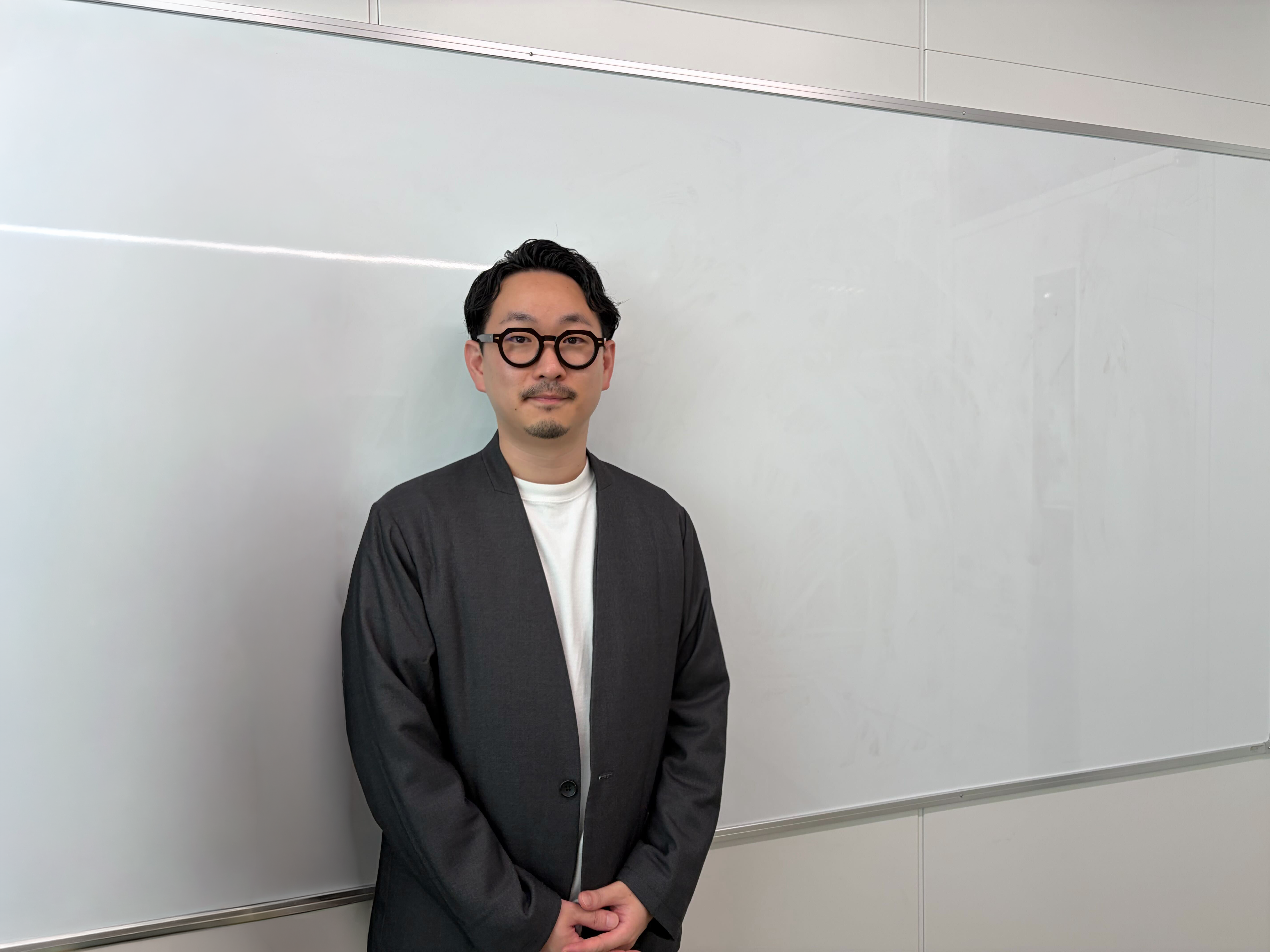
Mr. Tomohito Ide, General Manager, E-commerce Business Division, Locabo Works Inc.
Mr. Tomohito Ide, General Manager, E-commerce Business Division, Locabo Works Co., Ltd.
Challenges and Background Before Implementation: “Supply–Demand Mismatch in Call Centers” and Response Rate Risks Caused by Advertising Fluctuations
The immediate background to Locabo Works Inc. beginning to consider “BOTCHAN AICALL” lay in structural challenges specific to mail-order businesses that rely primarily on web advertising.
At the company, the number of new acquisitions fluctuates significantly depending on the status of web advertising placements. As a result, the volume of inbound calls also increases or decreases, and managing the number of operator seats in the call center had become a chronic challenge. In general, adjusting the number of seats requires a lead time of around one month, but in practice it is difficult to create highly accurate advertising placement plans that far in advance. Consequently, the company was continually exposed to a two-sided risk: if there were too many seats, idle time would occur and costs would rise, while if there were too few, the response rate would decline.
Mr. Ide: “It is difficult to make accurate forecasts about the status of ad placements for the following month. Although we have built a logic to calculate the number of seats, it rarely works out as expected. We repeatedly faced issues such as incurring excess costs or, conversely, not having enough seats and seeing response rates decline.”
Furthermore, a decline in response rate is not merely an operational issue. If more customers who could not be attended to end up consulting consumer affairs centers, it becomes a direct management risk. We determined that even for initial call reception, if AI can reliably answer incoming calls and raise the response rate to nearly 100%, such risks can be structurally contained.
Mr. Ide: “The decline in response rates is not only a cost issue, but also a matter of risk management for the company. If AI can reliably handle the initial reception, then I believed there was more than enough justification for implementation, not only from the standpoint of operational efficiency, but also as a way to hedge management risks.”
We began seriously considering the introduction of a voice AI–enabled service like BOTCHAN AICALL around December 2024. Our representative, Mr. Iwasaki, shared information that AI services capable of handling contract cancellations were starting to appear on the market, which prompted us to start examining the feasibility of implementation.
How we discovered the service and why we chose to implement it: a practical decision focused on speed and reliability
After encountering “BOTCHAN AICALL,” we decided to implement it in September 2025. In making this decision, what Mr. Ide prioritized was not only its technological superiority, but also the practical certainty of implementation—specifically, how quickly and reliably it could be put into operation.
Our initial concern was whether AI calls would fit our actual business workflows. However, from the requirements definition stage, the issues were clearly organized, and the implementation—including API integration—was handled promptly. As a result, after a lead time of about three months, we were able to go live in January 2026.
Mr. Ide: “Several issues arose during the implementation, but each time you responded promptly. Since no problems were ever left unresolved, I had almost no negative impressions throughout the entire process.”
Decision criteria during the implementation process and execution: revisiting KPIs midstream based on the axis of “customer experience”
When we introduced “BOTCHAN AICALL,” the initially defined KPI was the “cancellation prevention rate.” Given that roughly 80% of inbound calls were requests to cancel, there were expectations that the AI would play a role in dissuading customers from cancelling.
However, about one month after operations began, Mr. Ide decided to revise this KPI. Behind that decision were several overlapping decision-making factors.
First, there is the inherent difficulty of preventing cancellations themselves. From the outset, we recognized that simply setting this as a KPI would be technically and operationally challenging.
Second, consideration for the customer experience. There have been cases where customers who responded over the phone that they would “continue” later contacted us again to cancel, and we had a clear sense that forcing retention efforts does not lead to positive outcomes in our relationships with customers.
Third, we decided to prioritize implementation speed. Rather than making a high cancellation-prevention rate a precondition, we determined that, for the business as a whole, it would be more rational to first bring AI calls into operation quickly and secure tangible results in terms of maintaining response rates and reducing operator costs.
Mr. Ide: “When a customer wishes to cancel, we need to think carefully about whether trying to force them to stay really provides a positive experience for them. Rather than that, we concluded that it is more sincere—for both the company and the customer—to reliably accept incoming calls, complete the procedures smoothly, and at that time thoroughly listen to the reasons for cancellation.”
With this policy shift, an operational framework has been established in which customers wishing to cancel are provided with a smooth cancellation process and a hearing of their reasons, while customers who prefer human assistance are handled through a live-agent transfer flow. The VoC (Voice of the Customer) data collected through these hearings is expected to be utilized in future CRM initiatives and product promotion efforts.
Results and value gained after implementation: sustainably maintaining a response rate of 96% or higher and structurally improving organizational management
Since the production launch of “BOTCHAN AICALL,” Locabo Works has been seeing tangible results in several areas.
Stability of response rate as a management indicator
The most significant achievement Mr. Ide cites is the sustained maintenance of a response rate of over 96%. Previously, fluctuations in call volume due to changes in advertising created a structure in which the response rate was prone to instability. With the introduction of BOTCHAN AICALL, this issue has been structurally resolved. It has curbed the risk of an increase in the number of inquiries to consumer centers and is directly contributing to greater management stability.
Optimization of operator structure and reduction of management workload
We also succeeded in reducing the number of operator seats to nearly half. This reduction not only decreases the effort required for management, but also reduces the types of errors attributable to individual operators, significantly streamlining escalation handling and training resources.
Mr. Ide: “As the number of people increases, you see as many different types of mistakes as there are people. From a management perspective, this requires individual handling for each person, which had been increasing the complexity of management. As we transition to BOTCHAN AICALL, that management burden is being eliminated, and we are now able to allocate resources to the initiatives and improvement activities that the team should truly be focusing on.”
Accelerating the PDCA cycle by shortening the lead time for policy changes
In traditional manned call center operations, changing response procedures required time for staff training and for operators to become familiar with the management interface. With BOTCHAN AICALL, changes can be reflected immediately via API, significantly shortening the lead time from decision-making on strategy changes to implementation.
Mr. Ide: “When you want to change how we respond, AI allows you to revise and apply those changes immediately. While training people takes a certain amount of time, AI reflects the new settings across all cases the moment you update them. In a business centered on digital marketing, I strongly feel that this speed is a major advantage.”
Future outlook and key initiatives: Expanding the use of outbound measures and enhancing CRM strategies through the VoC loop
Currently, BOTCHAN AICALL is mainly used for handling inbound calls, but going forward, we plan to broaden its use in two directions: expanding into outbound calls and feeding the collected VoC data back into our CRM initiatives.
As a concrete example of how to leverage outbound initiatives, Mr. Ide cites a “proactive approach to product surplus.” Through interviews, the team has learned that a common reason for cancellation is that “customers still have product left.” Based on this data, the envisioned process is to predict when a customer’s product supply will run out, automatically place outbound calls at the appropriate time, and then automate the subsequent steps of sending guidance on continuing the service and related offers via SMS and other channels.
Mr. Ide: “For example, if during a hearing we learn that a customer on a three-bag subscription plan still has some stock on hand, we can calculate the timing at which their inventory will run out four months later. If we can build a flow where AI automatically calls the customer at that timing, confirms their intention to continue, and then sends a value-added offer via SMS, I believe it will function very efficiently as a cross-sell and reactivation measure for dormant customers.”
In addition, addressing non-payment issues arising from the increased use of postpaid settlement is also a critical topic. Because forced suspension of subscription plans due to incomplete payments leads directly to lower LTV, we are also considering improving subscription retention rates by automating outbound approaches to customers whose payment due dates are approaching.
In addition, as a medium-term outlook, we are envisioning the creation of a loop structure in which the VoC data accumulated through BOTCHAN AICALL is fed back into upstream CRM initiatives and improvements to marketing creatives. By analyzing hearing data on reasons for cancellation and identifying patterns in the timing and causes that tend to lead to churn, we expect to design CRM initiatives from the perspective of “preventing” cancellations.
Advice for corporate staff facing similar challenges: “Reduce your worries and focus your resources on value-adding work.”
Finally, we received a message from Mr. Ide for those in charge at companies facing similar challenges.
Mr. Ide: “I feel that many businesses engaged in new customer acquisition through web advertising, as well as companies facing challenges with call response rates and the workload involved in managing inbound calls, share similar issues. For such companies, I recommend first trying a trial and confirming in your own environment how human handling and AI handling differ. Naturally, suitability will vary from company to company, but I believe there is significant value in at least giving it a try.”
By implementing “BOTCHAN AICALL,” Locabo Works has simultaneously resolved both the risk of low response rates and cost-related challenges. The reduction in operational burdens has created additional capacity, enabling the company to concentrate its resources on the activities that truly deserve focus, such as planning new initiatives and driving continuous improvement.
“As a result, with fewer issues to worry about, we’ve been able to allocate more resources to positive initiatives such as planning new measures.”
Within the constraints of running a business with a small team, Locabo Works’ use of BOTCHAN AICALL as a foundation for operational efficiency serves as a practical leading example for mail-order businesses. Their efforts to further advance their operations through integration with BOTCHAN will continue going forward.
If you would like concrete advice tailored to your circumstances or on how you might apply this within your own company, please feel free to contact us.
A specialist consultant will respond.